For residential interior design, glass is increasingly used as a material that actively shapes atmosphere and light behaviour within a space. Through techniques such as kiln-fusing, slumping, stained glass construction, precision cutting, and controlled tinting, glass can be engineered to influence how light is diffused, layered, and experienced within a space. The result is not uniform illumination, but light that responds directly to architectural intent and interior composition.
This shift towards material-led lighting design aligns closely with Northern Lights’ approach, developed over four decades of working with glass as both a structural and expressive medium. Originally founded in Derbyshire in 1987 as a family-run stained glass workshop, the company merges traditional craftsmanship with advanced manufacturing techniques to create lighting defined by precision, authenticity, and design control.
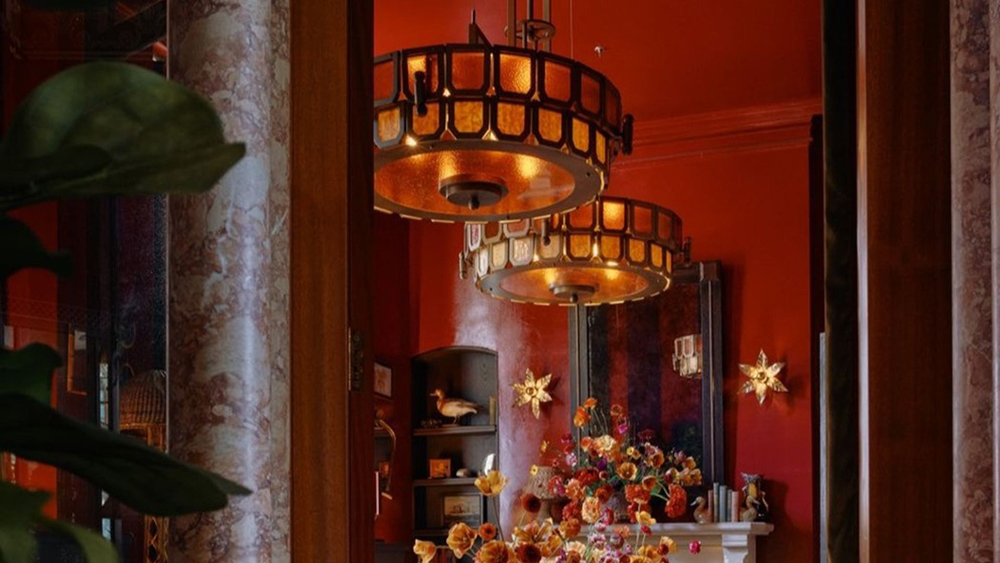
At Northern Lights, glass is treated as a design tool rather than a fixed material outcome. Each process is explored for how it alters light behaviour through opacity, curvature, layering, and surface texture. Kiln processes, cutting methods, and tinting techniques are used to shape atmosphere and refine how light is experienced within residential interiors.
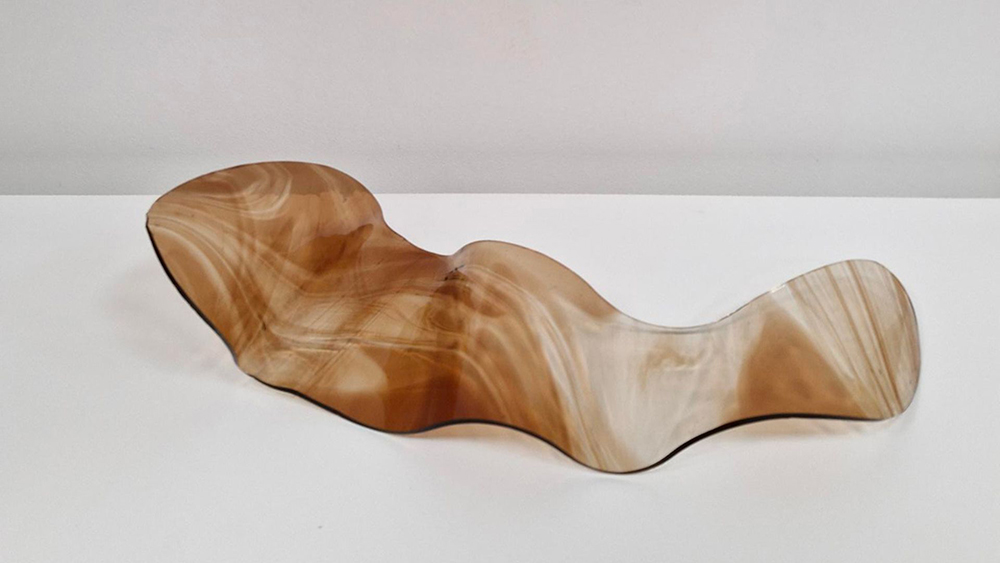
Experimentation underpins this approach. Materials are tested and refined to understand how subtle changes in formation modulate light at both object and spatial scale, enabling designers to specify lighting that balances technical precision with emotive presence. This is expressed across key pieces in their 2026 Ceiling Collection.
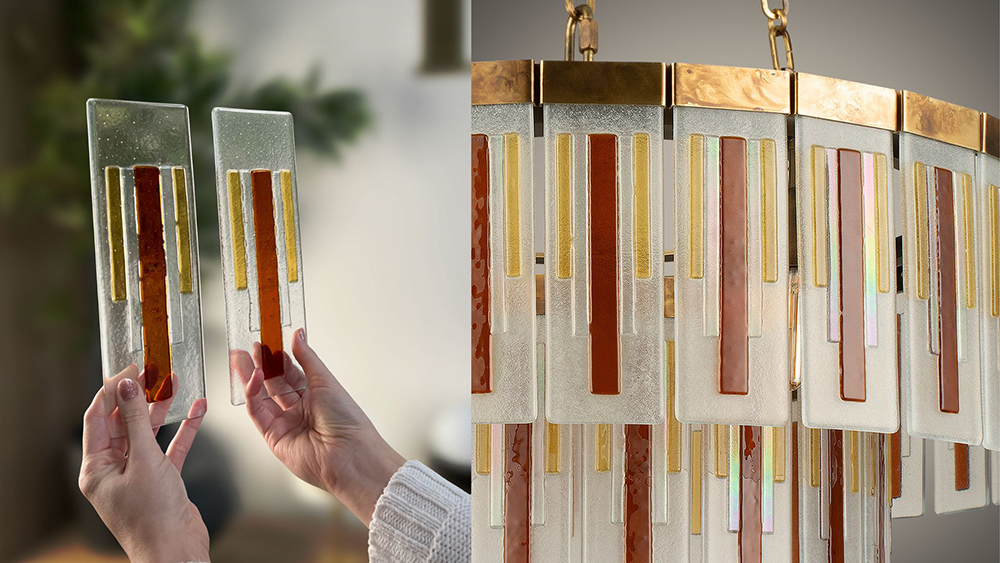
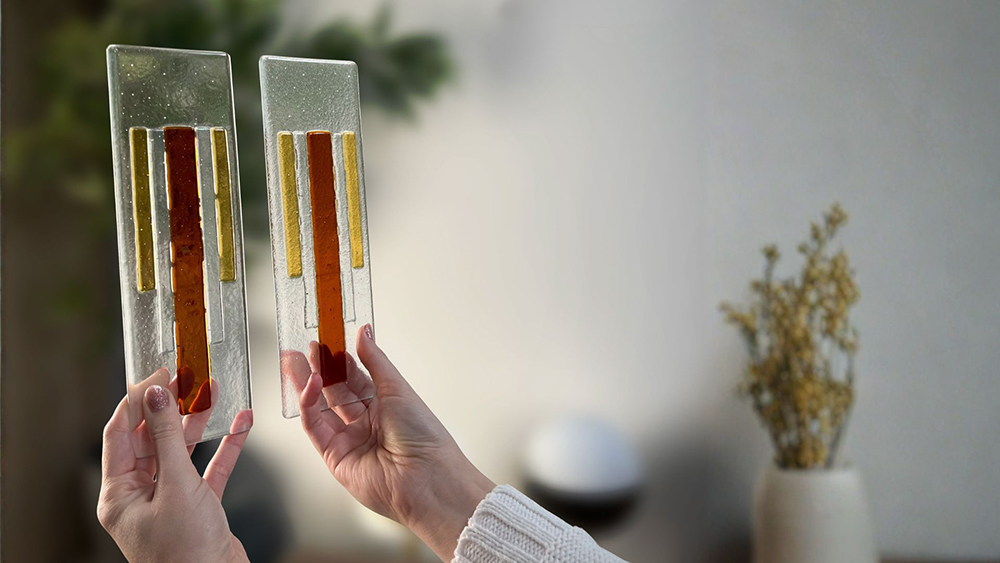
Ember explores the transformation of colour and depth through kiln-fused glass. Coloured sheets are hand-cut, layered, and fired at high temperature, where they fuse into a single material. The process creates internal variation within the glass itself, producing subtle tonal shifts as light passes through.
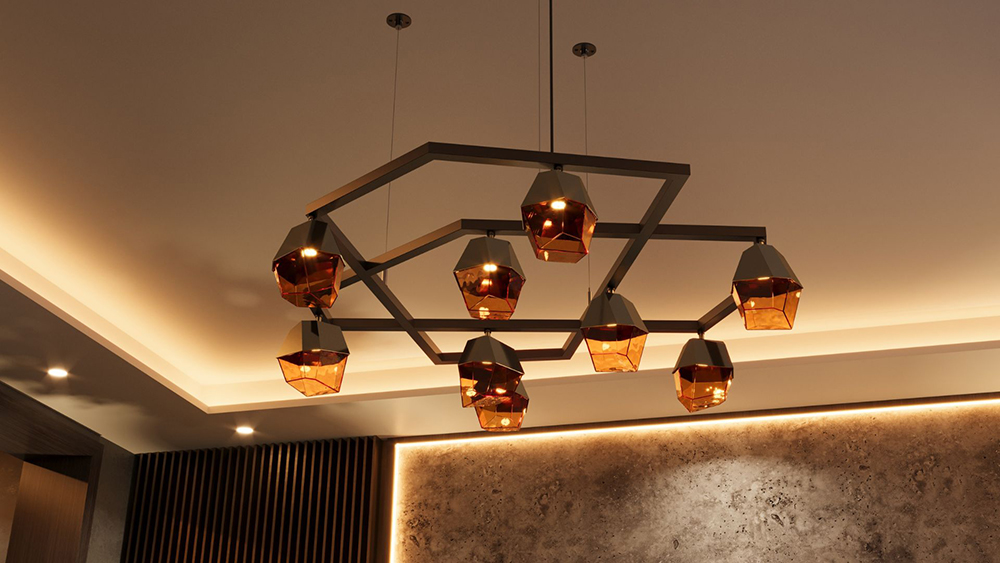
Jewel draws on the geometry of faceted stone, using cut glass to control reflection, refraction, and rhythm within a composition. Each element is hand-coloured to build tonal variation, while precision brass framing introduces structural clarity and definition.
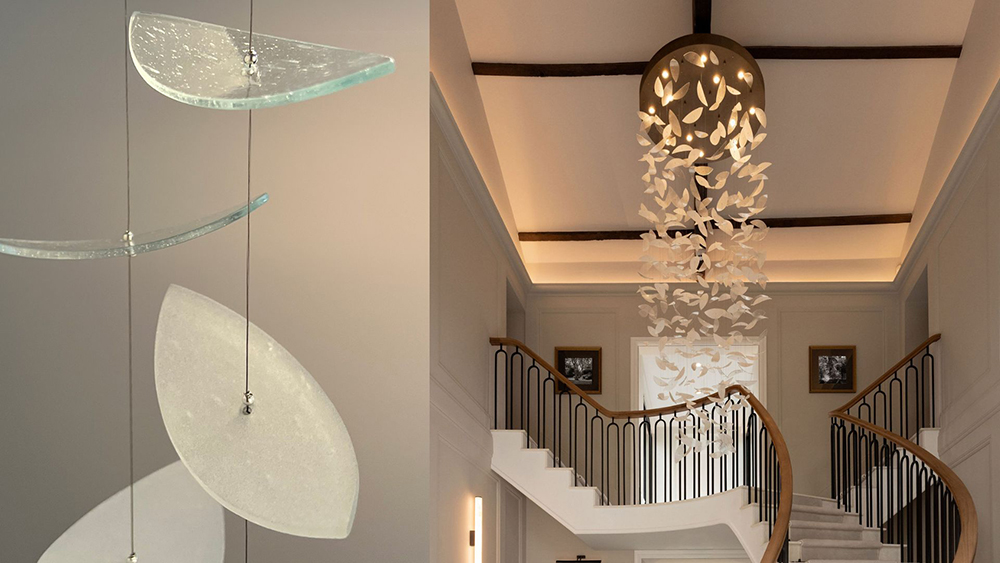
Veil takes a more organic approach. Seeded glass is hand-cut, kiln-slumped into leaf-like forms, and partially frosted to refine opacity and diffusion. Suspended in cascading formations, each element interacts with light independently, creating shifting layers of transparency and reflection.
Scale, proportion, materiality, configuration, and finish can be customised to suit architectural context and interior intent, allowing each piece to be developed as a tailored response rather than a predefined object.
Glass is not treated as a finished surface, but as a controllable material system. Decisions made in early design and fabrication – how it’s cut, fused, layered with other materials, or suspended – directly influence how light behaves within space, enabling designers to engage with lighting as part of the wider spatial composition.
These principles also inform bespoke commissions, developed through the same material-led approach to glass and light.
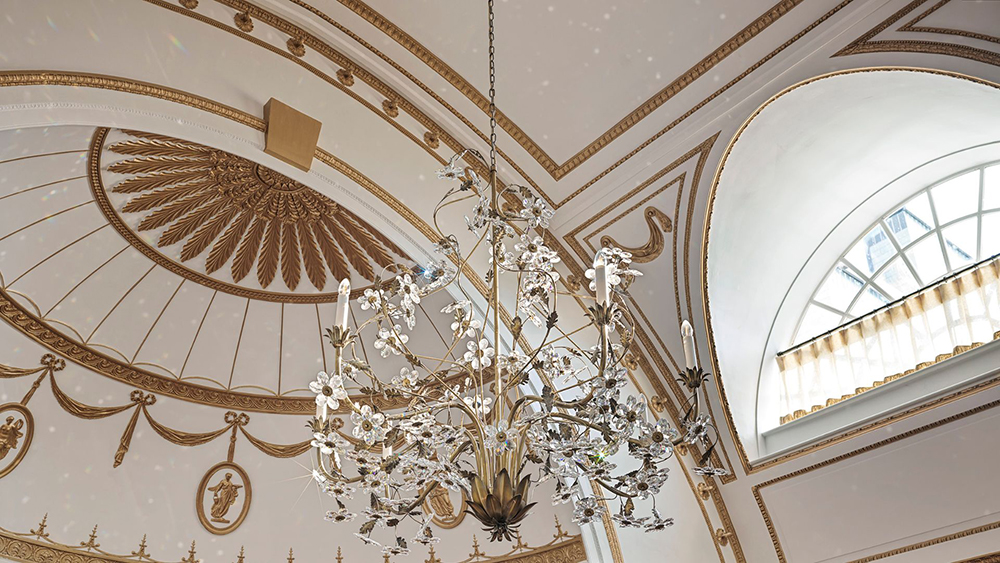
Alongside glass, the studio works with brass, steel, and natural alabaster, expanding the material palette available to designers and allowing for greater variation in tone, texture, and translucency.
For interior designers, Northern Lights offers a dedicated trade account providing access to specification tools, trade pricing, and configurable lighting options. northern-lights.co.uk/trade